Drivers' hours infringements: what the law expects you to do, and how DVSA now checks it
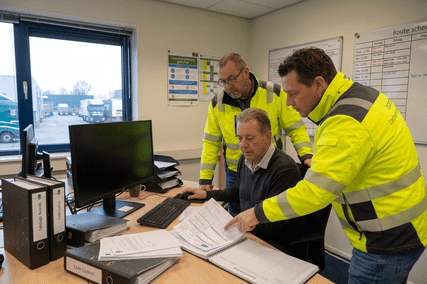
Spotting a drivers' hours infringement is not the end of the job. It is the start of one. Under your operator licence, the law expects you to look into how each infringement happened, raise it with the driver, decide what needs to change, and keep a record that shows you did. Detecting the breach is the easy part. Acting on it, and being able to prove you acted, is what actually keeps you compliant.
What has changed is not the rule. It is DVSA's ability to see whether you follow it. Enforcement has moved steadily towards the data, and the record you keep is now the thing that gets checked.
What counts as a drivers' hours infringement?
A drivers' hours infringement is a breach of the assimilated drivers' hours rules based on Regulation (EC) No 561/2006. The most common: driving more than the 9-hour daily limit, missing the 45-minute break after 4.5 hours, or cutting daily rest below 11 hours. From 1 July 2026 the rules also reach vans between 2.5 and 3.5 tonnes on international work.
Detecting an infringement is only step one
DVSA's audit standard expects operators to show that all reported infringements are robustly investigated and that appropriate action is taken to prevent a recurrence. Detection on its own does not meet that bar. We call the space between a detected infringement and a closed, documented one the follow-up gap. It is where most operators are exposed.
What a driver debrief actually is
The driver debrief is how you turn a detected infringement into evidence of management control. The transport manager investigates how the infringement arose, meets the driver, presents the evidence, and agrees what needs to change. The conversation and the action are recorded. A signature on a standard printout is thin evidence. A short note that explains what actually changed is what holds up when someone reviews it months later.
How DVSA checks all of this now
Your Operator Compliance Risk Score, the OCRS, is recalculated every morning on a rolling three-year window. In 2024-25 DVSA carried out 31,824 risk-based targeted checks, above its target of 28,000. The Earned Recognition scheme runs the other way: operators who prove their systems through KPIs are largely taken off routine roadside checks. The test has moved from do you have the data to can you show what you did about it.
What you can do today
- Pull your tachograph data from the last three months and look at where infringements sit. Patterns by driver, route or shift tell you more than totals.
- Make the debrief a fixed weekly slot. Consistency is one of the first things an inspector looks for.
- For each infringement, record the cause, the action and what changed. A signed printout alone will not carry you through a desk-based assessment.
This is the part Roadsoft built its Digital Assistant to take off your plate: it reaches the driver the day after an infringement and logs the exchange as an inspection-ready record.
The record is the thing that gets checked
A drivers' hours infringement is not the problem to fear. An infringement you cannot show you handled is. Get the follow-up right, and inspection-readiness stops being something you scramble for. For a practical look at how the debrief works, read our guide on dealing with drivers' hours infringements.
Frequently asked questions
A breach of the assimilated drivers' hours rules recorded on the tachograph, such as too much driving time, a missed break or too little daily rest.
Your operator licence undertakings require you to keep drivers' hours under review and act on what you find. A documented debrief is how you show DVSA and the Traffic Commissioner that you acted.
Driver cards at least every 28 days and vehicle units at least every 90 days. Records must be kept for at least 12 months.
A remote check where DVSA asks you to submit compliance records within 7 to 10 days and judges your systems from them. It can lead to a referral to the Traffic Commissioner.
Yes. Accredited operators are largely removed from routine roadside checks, but the status must be maintained by continuing to handle infringements correctly.